A2P Logistics
One record for every car, from the request to the paid invoice.
A fleet operations platform for a car-transport operator: the diary, the drivers, the money and the proof of every collection and delivery, on one set of records.
- Client
- A2P Logistics
- Agency
- VALKER
- Trade
- Car transport
- The work
- Logistics platform, Web app, Driver app, Works offline
- Built with
- Next.js, Postgres, Drizzle, Vercel, Neon
- 1 jobFor every car, followed from the request to the paid invoice
- OfflineCollection and delivery checks save with no signal
- MarginWorked out for every job from its price and its true cost
The brief
A2P Logistics moves cars between dealers. One trailer often carries cars for several dealers, collected and dropped in order, and some days end in an overnight. The week was held in a paper diary and on the phone.
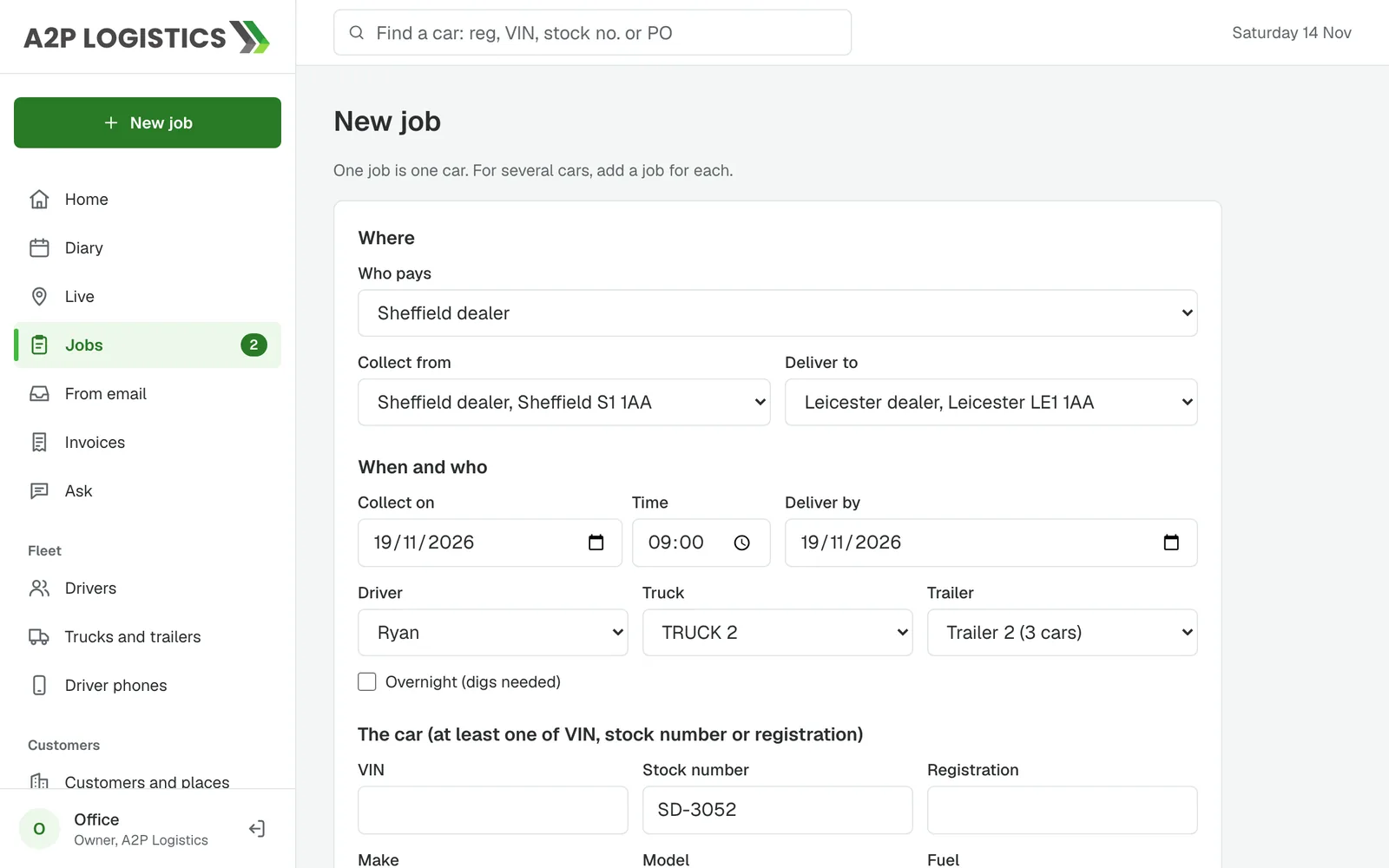
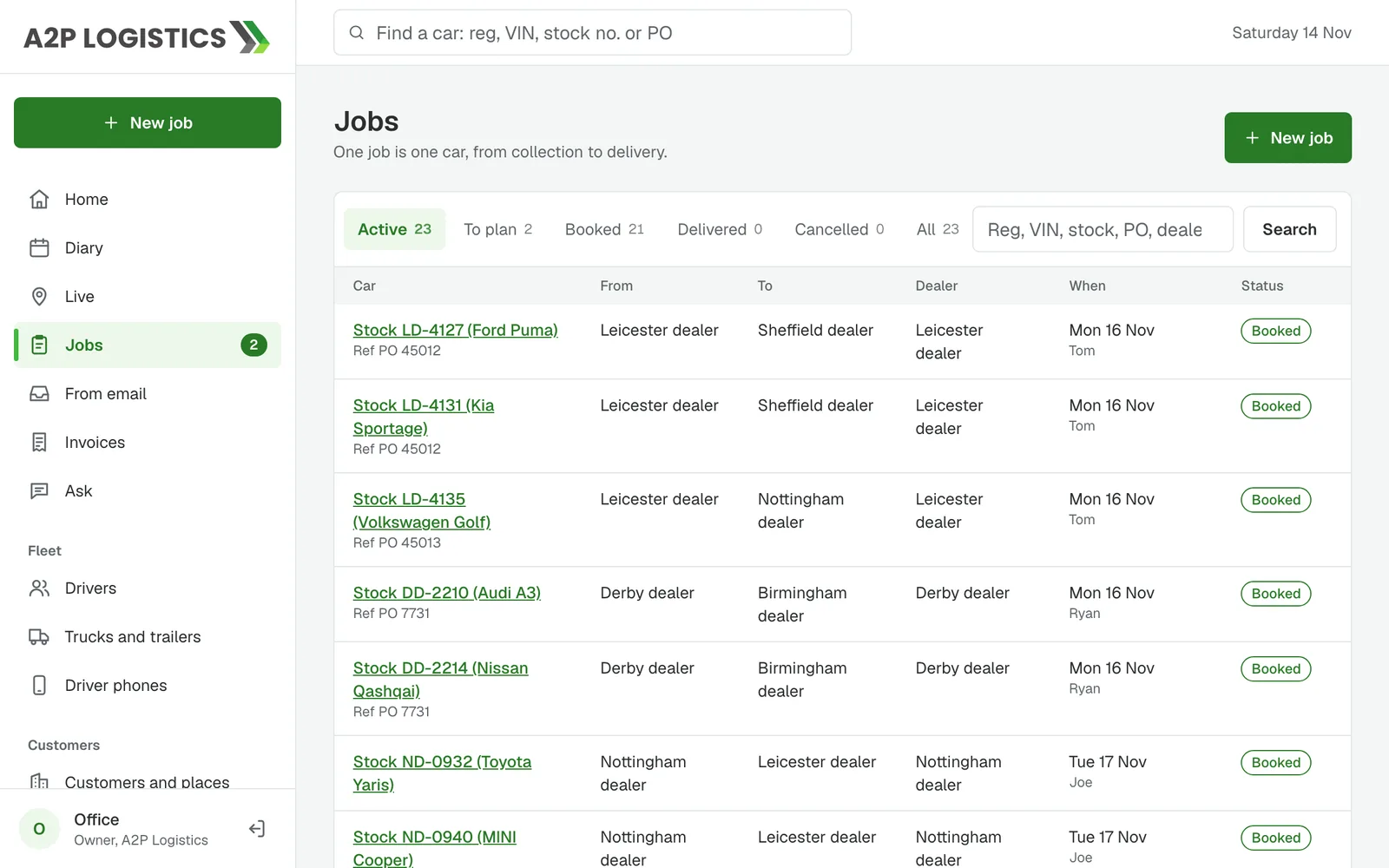
We designed the platform around how a transporter really works: a job is one car moved from A to B, booked for a day and a time with a driver, their truck and their trailer. Every part of the system reads and writes those same records, and every change lands on a timeline.
The first version was built, tested and deployed on 16 October 2026. In the four weeks since it has gained the dealer portal, a price, a cost and a margin on every job, invoices raised in Xero, mileage and servicing from the trackers already in the trucks, and an assistant that plans the diary when asked. A2P are setting it up for their first weeks on it.
What we did
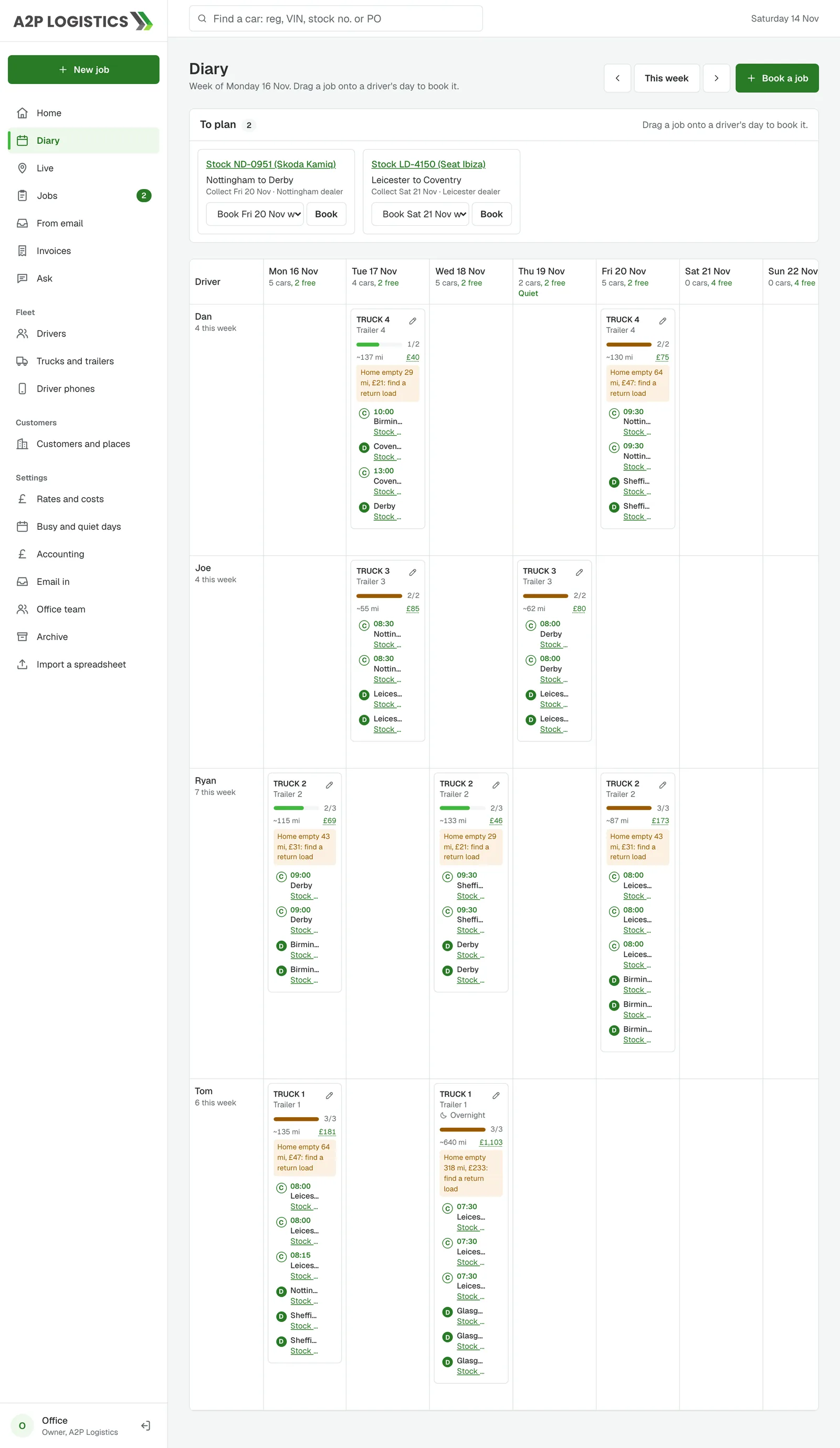
- A shared diary for the week: one job per car, booked for a day and a time with a driver
- A trailer capacity check every time a car goes on a driver's day
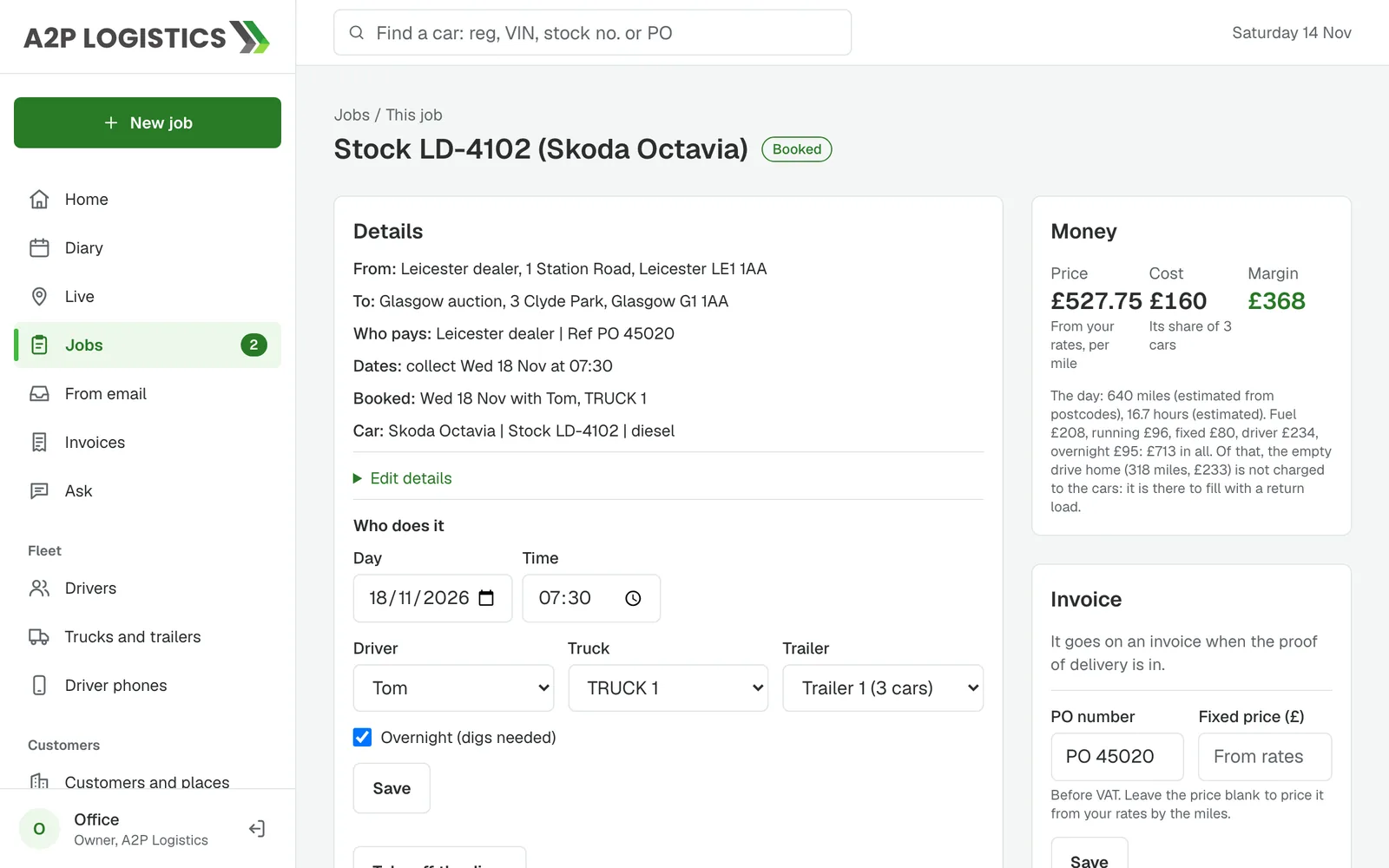
- A price, the true cost and the margin worked out for every job, with the empty miles home shown
- Drivers and leave, with any booked day a day off would break flagged at once
- A driver app that installs from the browser and works with no signal
- Collection and delivery checks with photos, each fingerprinted on the phone as it is taken
- A portal where dealers ask for a delivery and follow their own cars
- Booking emails from dealers read into draft jobs for the office to approve
- Invoices raised in Xero once the proof of delivery is in
- Mileage, arrival times and servicing reminders read from the trackers already in the trucks
- An assistant that plans the diary and changes jobs when asked
- A timeline on every job, and each operator's records kept apart by the database itself
A closer look
Left out on purpose
- Building our own GPS tracking. Where tracking is wanted, it is read from the tracker the fleet already uses.
- Automatic text and WhatsApp blasts to dealers.
- An assistant that guesses. A price or a promise is always worked out from the records.
Common questions
VALKER, a UK web design, marketing and AI search agency in Stratford-upon-Avon, built it. A fleet operations platform for a car-transport operator: the diary, the drivers, the money and the proof of every collection and delivery, on one set of records.
It holds the whole week in one place. Each car is a job, and each job is booked for a day and a time with a driver, their truck and their trailer. The office plans from a shared diary, the system checks the trailer has room before a car goes on it and works out what the job earns, and the driver's phone carries the checks at collection and delivery. Because every part reads the same records, a change in one place shows everywhere.
Yes. A collection or delivery check saves on the phone, with its photos compressed and fingerprinted there, and uploads by itself when the signal comes back. Nothing is cleared from the phone until the server confirms it has it, and checks can arrive in any order.
As evidence the application itself cannot delete. Each photo carries a fingerprint taken on the phone at capture, each check records who signed and when, and every change to a job is written to a timeline that can only be added to.

Want something like this?
Twenty minutes, no pitch deck.